Botanical Overview
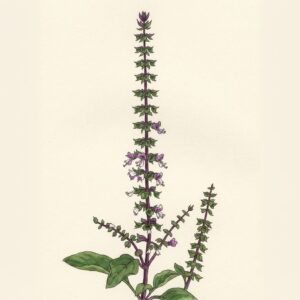
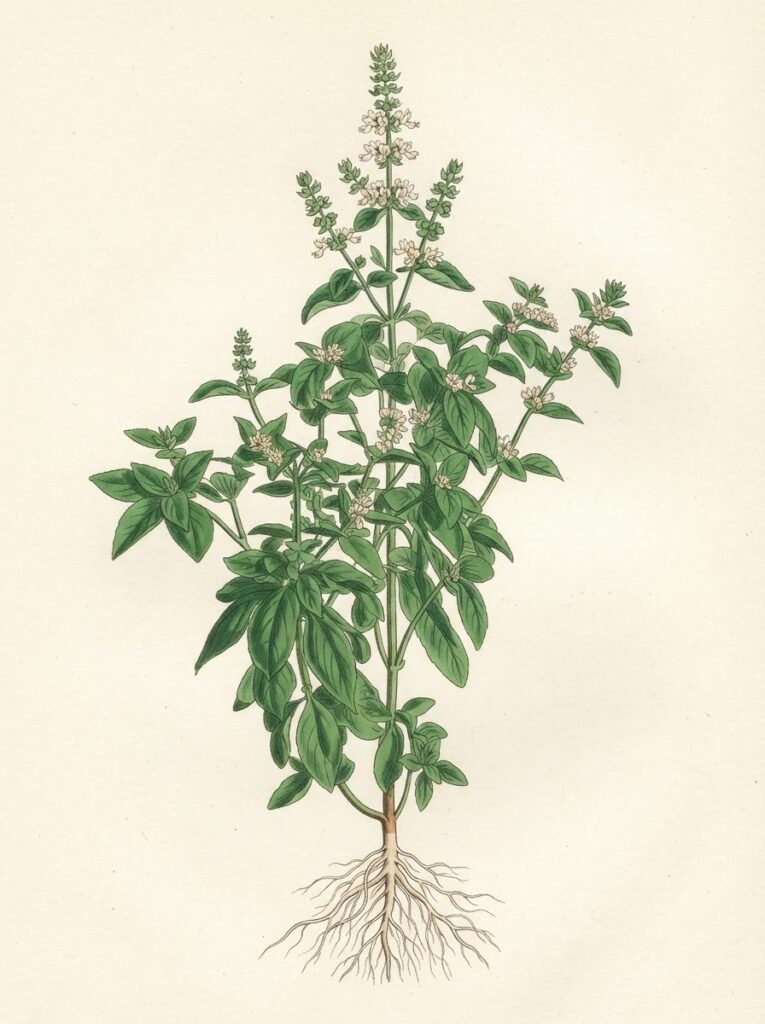
Ocimum basilicum, commonly known as basil or sweet basil, is a member of the Lamiaceae family. It is native to the Mediterranean region but cultivated widely in Asia and tropical Africa. The primary parts used medicinally include the leaves, flowers, and whole herb. Basil is well-known for its aromatic leaves used both culinarily and therapeutically.
Energetics
This herb is considered warming in temperature and neutral in moisture. Its taste profile includes bitter, pungent, and sweet notes. Directionally, basil’s energy is ascending, and it has a relaxing tonicity. It primarily acts on qi in traditional energetic systems.
Primary Actions
- Antimicrobial
- Carminative
- Antispasmodic
- Anti-inflammatory
- Digestive stimulant
Indications
Western
- Indigestion
- Flatulence
- Mild respiratory congestion
- Headache
- Mild anxiety
- Inflammatory conditions
Syndromes
- Digestive discomfort
- Upper respiratory tract irritation
- Mild nervous tension
TCM
No well-supported traditional TCM indications available for this species.
Ayurveda
- Cough
- Cold
- Headache
- Diarrhea
Syndromes
- Vata imbalance
- Kapha imbalance
- Ama (toxicity)
Unani
- Stomachache
- Bloating
- Headache
- Cough
Syndromes
- Ghaul (digestive disorders)
- Iltihab (inflammation)
Constituents & Mechanisms
This species contains essential oils rich in eugenol, linalool, and methyl chavicol, as well as flavonoids and tannins contributing to its antimicrobial, anti-inflammatory, and carminative effects.
Dosage & Preparations
- Infusion: 1-2 g dried leaf per cup, 2-3 times daily
- Tincture: 1:5 ratio in 40% ethanol, 2-5 mL 1-3 times daily
- Essential oil: used topically or aromatically diluted only
Safety & Contraindications
Generally safe in culinary or traditional medicinal doses. Avoid large medicinal doses during late pregnancy due to potential uterine stimulant effects. Allergic reactions are rare but possible, especially in those sensitive to Lamiaceae plants. Monitor use with anticoagulants for possible interactions.
Astrological Correspondences
No reliable traditional sources confirm planetary or elemental rulers for Ocimum basilicum.
Selected References
- Ocimum basilicum Monograph – Plants For A Future
- WHO Monographs on Selected Medicinal Plants Volume 1 – Ocimum Species (1999)
- Assessment report on Ocimum basilicum – EMA HMPC (2014)
- Phytochemical and Pharmacological Review of Ocimum basilicum Linn (Singh et al., 2012)
- Ayurvedic Pharmacopoeia of India (2016)