Botanical Overview
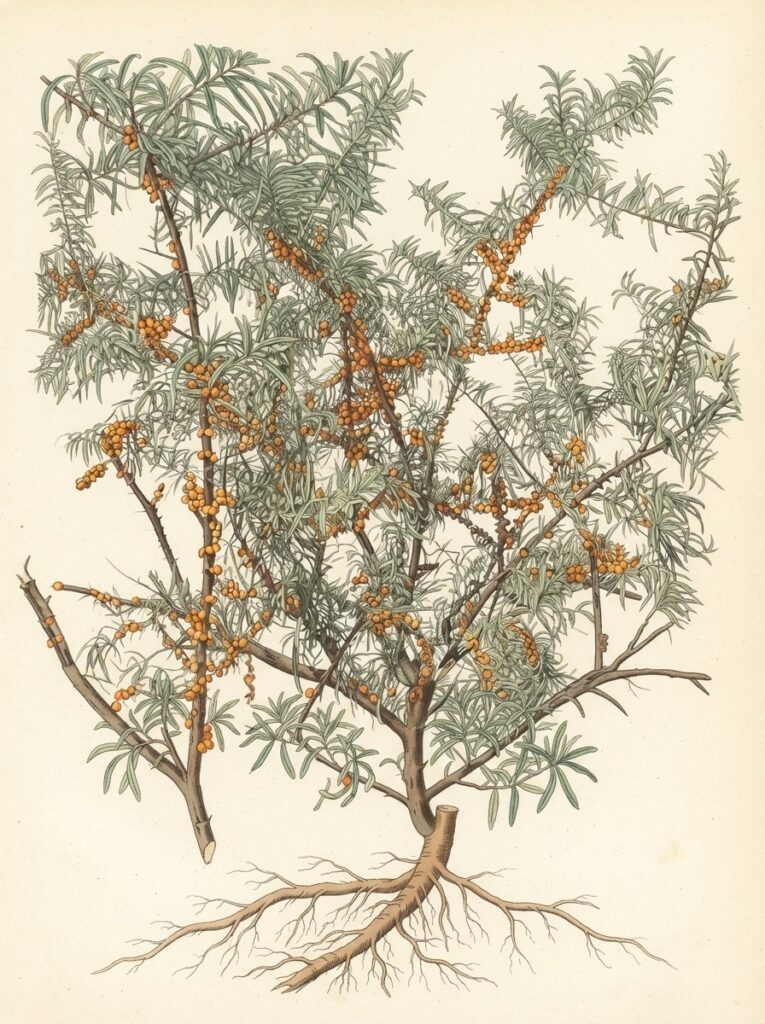
Hippophae rhamnoides, commonly known as Sea buckthorn, Sand thorn, or Seaberry, belongs to the Elaeagnaceae family. This hardy shrub is native to Europe, Central and Northern Asia including China and Russia. The plant’s berries, leaves, seeds, and oil are utilized medicinally and nutritionally.
Energetics
Sea buckthorn is considered to have a cooling temperature and moistening moisture quality. Its tastes include acidic, astringent, bitter, and salty. It is primarily tonifying and influences the regulation of qi, blood, and body fluids.
Primary Actions
- Antioxidant
- Anti-inflammatory
- Immune modulator
- Wound healing
- Cardioprotective
- Hepatoprotective
Indications
Western
- Skin dryness
- Inflammation
- Wound healing delay
- Fatigue
- Immune deficiency
- Cardiovascular insufficiency
Syndromes
- Chronic wounds
- Gastric ulcers
- Atherosclerosis
- Radiation damage
- Hepatitis
TCM
- Cough
- Dryness
- Fatigue
- Skin dryness
Syndromes
- Lung yin deficiency
- Qi and blood deficiency
Ayurveda
- Skin disorders
- Gastric ailments
- Fatigue
Syndromes
- Vata and Pitta imbalance
- Chronic ulcers
Unani
- Weakness
- Respiratory conditions
Syndromes
- Blood purification
- Wound healing
Constituents & Mechanisms
Key phytochemical families include carotenoids, flavonoids, fatty acids, phenolics, sterols, and vitamins C, E, and K. These contribute to its antioxidant, anti-inflammatory, and regenerative properties.
Dosage & Preparations
- Oral juice 30-50 mL daily
- Oil 1-2 mL 1-3 times daily
- Topical oil or gels applied 1-3 times daily
- Capsules of standardized extracts 100-500 mg per day
Safety & Contraindications
Sea buckthorn is generally safe for oral and topical use but should be avoided by individuals allergic to the plant. Use with caution during pregnancy and lactation due to limited data. Mild gastrointestinal discomfort may occur. Monitor for interactions when combined with anticoagulants or antiplatelet medications.
Astrological Correspondences
No reliable sources found to assign planetary or elemental rulers confidently.
Selected References
- European Medicines Agency HMPC Assessment Report: Hippophae rhamnoides L., fructus
- Plants For A Future (PFAF) Database: Hippophae rhamnoides – sea buckthorn
- Sea Buckthorn (Hippophae rhamnoides L.) as a Medicinal Plant: Current Evidence and Future Prospects, H. Kaur et al. (2018)
- WHO Monographs on Selected Medicinal Plants, Volume 3: Hippophae rhamnoides L. (Sea Buckthorn)