Botanical Overview
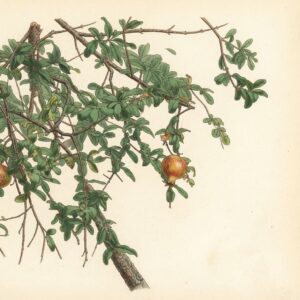
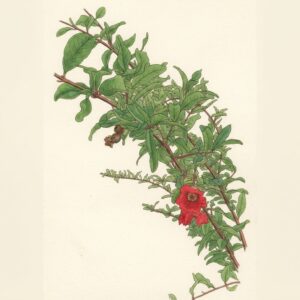
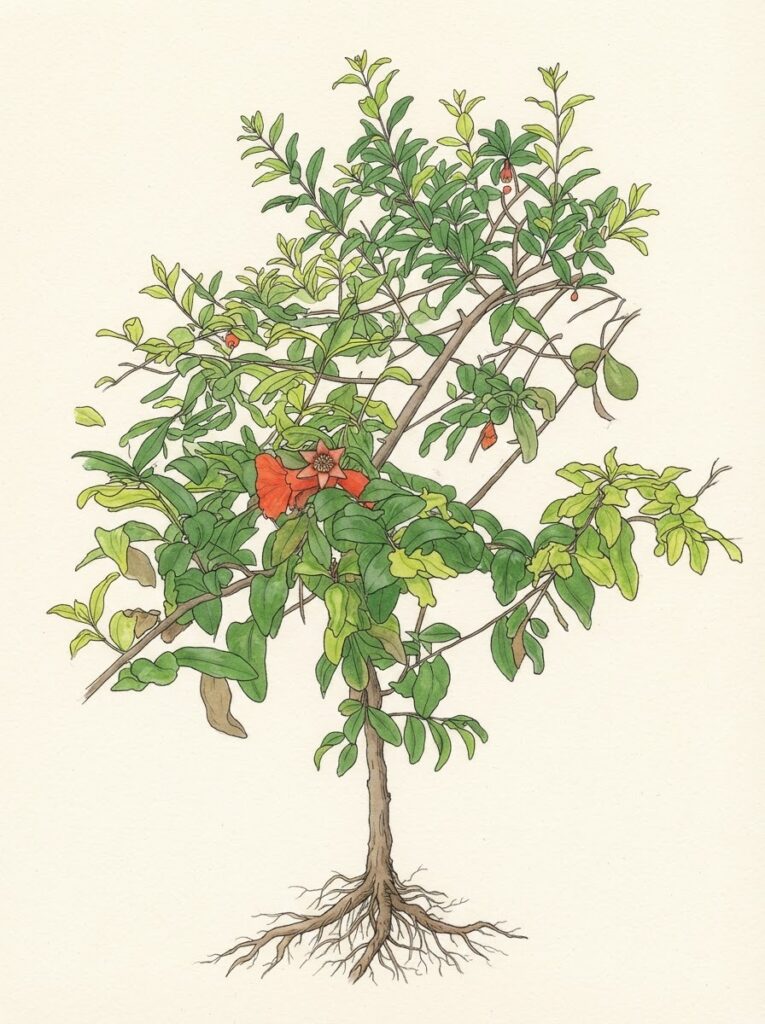
Punica granatum, commonly known as Pomegranate, belongs to the family Lythraceae. It is native to the Mediterranean region, Middle East, South Asia, and North Africa. Various parts are used medicinally including the fruit, peel, seed, flower, and bark. Known for its bright red fruit, this plant has a long history of traditional use.
Energetics
Pomegranate is considered cooling in temperature and drying in moisture. Its taste profile includes sweet, sour, and astringent properties. It exhibits a descending directionality and is tonifying in nature, particularly benefiting the blood.
Primary Actions
- Antioxidant
- Anti-inflammatory
- Astringent
- Antimicrobial
- Cardioprotective
Indications
Western
- Diarrhea
- Dysentery
- Inflammation
- Hypertension
- Hyperlipidemia
- Oral infections
- Skin irritation
Syndromes
- Cardiovascular disorders
- Gastrointestinal disturbances
- Inflammatory conditions
- Metabolic syndrome
TCM
- Bloody diarrhea
- Hemorrhoids
- Intestinal parasites
Syndromes
- Heat toxin accumulation
- Damp-heat in intestines
- Blood stagnation
Ayurveda
- Dysentery
- Diarrhea
- Helminthiasis
- Excessive thirst
Syndromes
- Pitta imbalance
- Rakta dushti (blood impurity)
- Kapha disorders
Unani
- Diarrhea
- Leukorrhea
- Sore throat
Syndromes
- Damvi (blood) imbalance
- Safra (bile) disorders
Constituents & Mechanisms
Pomegranate contains a rich array of phytochemicals including ellagitannins, punicalagins, flavonoids, anthocyanins, alkaloids, tannins, and polyphenols which contribute to its antioxidant, anti-inflammatory, and antimicrobial effects.
Dosage & Preparations
- Juice 50-150 mL daily
- Tincture 1:5 40% ethanol 2-5 mL 1-3 times per day
- Decoction of peel 3-6 g daily
- Powdered seed 1-3 g daily
Safety & Contraindications
Pomegranate is generally safe when consumed as a food or in medicinal amounts. Caution is advised for individuals on antihypertensive or statin medications due to potential interactions affecting drug metabolism. Allergic reactions are rare but possible. Data on safety during pregnancy and lactation are insufficient, so use with caution.
Astrological Correspondences
There are no well-documented planetary or elemental rulerships for Punica granatum in the contemporary or classical herbal esoteric literature.
Selected References
- Pharmacological and therapeutic properties of Punica granatum – Jurenka JS, Phytotherapy Research, 2008
- WHO Monographs on Selected Medicinal Plants – Volume 3: Pomegranate (Punica granatum), WHO, 2005
- Punica granatum L., cortex, European Medicines Agency Herbal Monograph, 2015
- Traditional uses, phytochemistry and pharmacology of Punica granatum – Shahzad M et al., Journal of Ethnopharmacology, 2018
- Punica granatum information, Plant Resources of South Asia (PFAF)