Botanical Overview
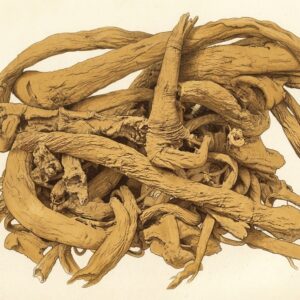
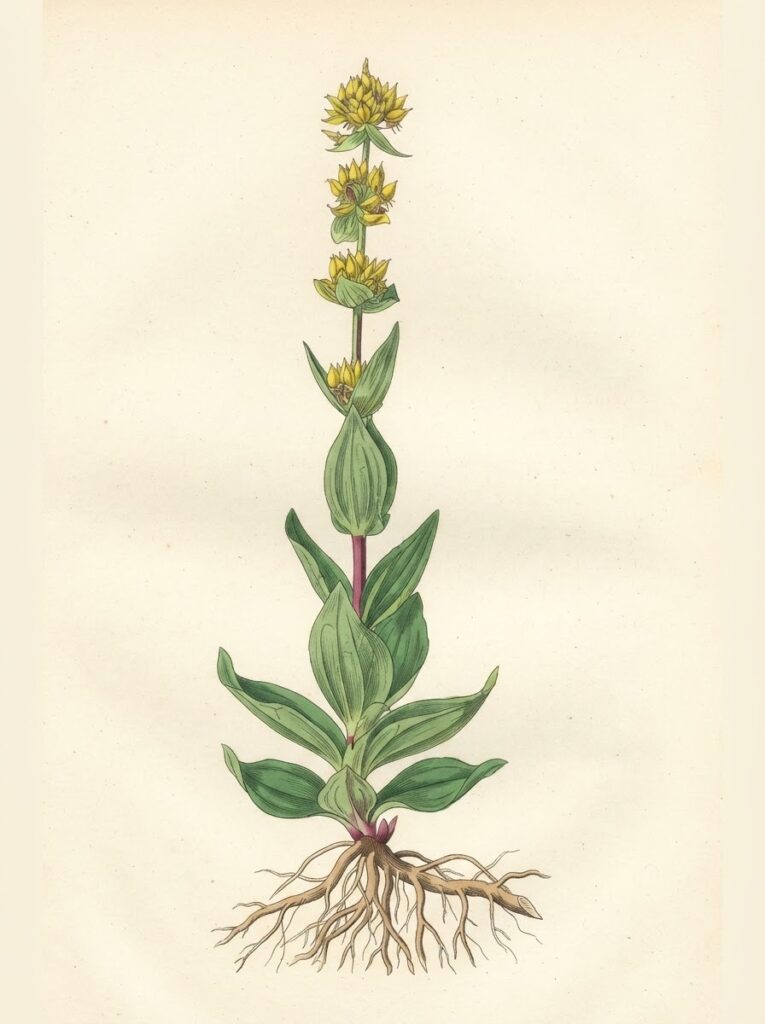
Gentiana lutea (family Gentianaceae), commonly called Great yellow gentian or Yellow gentian, is native to Central and Southern Europe and West Asia. The medicinal part used is primarily the root.
Energetics
This plant has a cooling temperature and drying moisture energetics. Its taste is distinctly bitter, with a descending directionality. It is tonifying in nature and acts primarily on the qi aspect in traditional energetic frameworks.
Primary Actions
- Bitter
- Digestive stimulant
- Choleretic
- Tonifying
Indications
Western
- Indigestion
- Loss of appetite
- Dyspepsia
- Bloating
- Flatulence
- Mild gastrointestinal spasms
Syndromes
- Functional dyspepsia
- Poor digestive fire
- Chronic gastritis
TCM
Not commonly used or recognized in formal TCM protocols.
Ayurveda
No specific indications recorded.
Unani
No specific indications recorded.
Constituents & Mechanisms
The root contains bitter secoiridoid glycosides, primarily gentiopicroside and amarogentin, along with xanthones and triterpenoids. These constituents impart strong bitterness and stimulate digestive secretions, promoting appetite and bile production.
Dosage & Preparations
- Tincture 1:5 in 40% ethanol, 2–5 mL taken up to three times daily
- Infusion of 2–4 g dried root, 1–2 times daily
- Powdered root 1–3 g, 1–2 times daily
Safety & Contraindications
Gentiana lutea is generally safe when used appropriately for digestive complaints. It should be avoided in cases of gastric or duodenal ulcers and obstructive biliary conditions. There is limited safety data in pregnancy and lactation, so use is not recommended or should be guided by a healthcare provider.
Astrological Correspondences
No reliable traditional sources confirm planetary or elemental rulers for Gentiana lutea.
Selected References
- European Medicines Agency – HMPC Monograph on Gentiana lutea L., radix
- Plants For A Future (PFAF) Database
- Herbal Medicines: A Guide for Health-Care Professionals, 2nd Ed., Newall et al.
- WHO Monographs on Selected Medicinal Plants