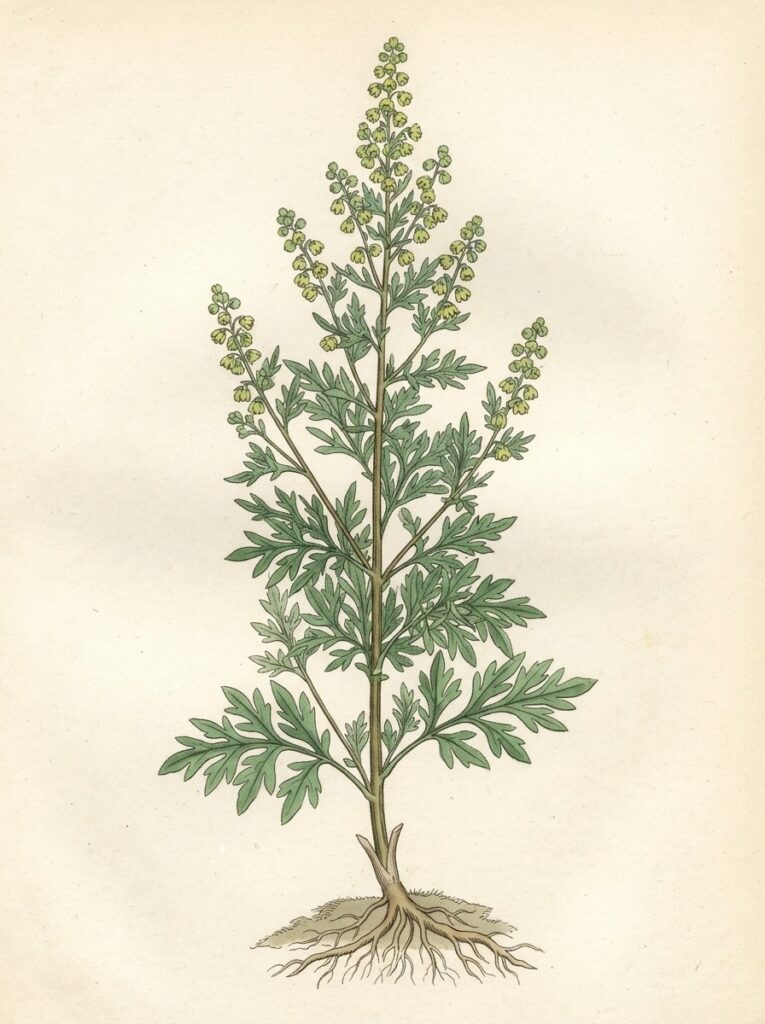
Botanical Overview
Artemisia annua, commonly known as Sweet wormwood, Annual wormwood, Qinghao, or Sweet Annie, is a member of the Asteraceae family. Native to China with a distribution that includes Southeast Asia, Africa, Europe, and North America, this herbaceous annual plant’s leaf and flowering aerial parts are used medicinally.
Energetics
Artemisia annua is traditionally considered cooling and drying with bitter and aromatic tastes. It has a relaxing tonicity and primarily influences the qi aspect of body energetics.
Primary Actions
- Antimalarial
- Antimicrobial
- Antiparasitic
- Antiviral
- Bitter
- Febrifuge
- Hepatoprotective
Indications
Western
- Fever
- Malarial paroxysms
- Viral infections
- Bacterial infections
- Parasitic infections
- Skin infections
Syndromes
- Malaria
- Febrile diseases
- Upper respiratory tract infections
TCM
- Night sweats
- Fever
- Hectic fever
- Heat in the blood
- Summerheat
Syndromes
- Heat diseases
- Malaria
- Summerheat syndrome
Ayurveda
Not classically documented; no widely accepted indications.
Unani
Not classically documented; no widely accepted indications.
Constituents & Mechanisms
Key phytochemicals include artemisinin (an antimalarial sesquiterpene lactone), flavonoids, coumarins, essential oils, and other sesquiterpene lactones responsible for its antimicrobial and antipyretic effects.
Dosage & Preparations
- Infusion: 2-4 g dried herb in 150-250 mL water, 2-3 times daily
- Extracts standardized to artemisinin: 100-300 mg daily
- Tincture: 1:5 40% ethanol, 2-5 mL 1-3 times daily
- Capsules with powdered herb: 500 mg 2-3 times daily
Safety & Contraindications
Generally safe when used appropriately, though high doses or long-term use may cause neurotoxicity or hepatotoxicity. Use during pregnancy is not recommended due to insufficient safety data. Potential interactions include antiretroviral drugs, immunosuppressants, and anticoagulants.
Astrological Correspondences
There are no well-established planetary or elemental rulers for Artemisia annua in classical herbal or esoteric traditions.
Selected References
- WHO Monographs on Selected Medicinal Plants: Artemisia annua L. (2007)
- Chinese Herbal Medicine: Materia Medica by Dan Bensky et al. (2004)
- Phytotherapy Research: Phytochemistry and pharmacology of Artemisia annua L. (Ferreira et al., 2010)
- European Medicines Agency assessment report (2018)