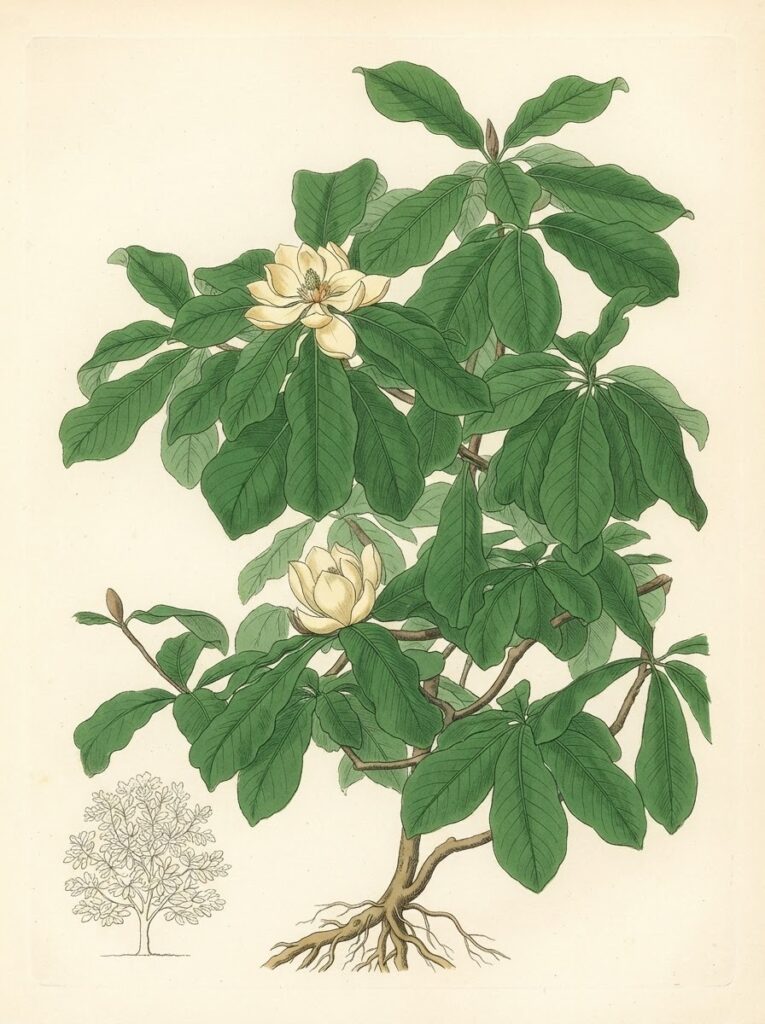
Botanical Overview
Magnolia officinalis belongs to the Magnoliaceae family and is commonly known as Magnolia bark or Houpu Magnolia bark. The medicinal part used is primarily the dried bark. This tree species is native to East Asia, particularly China and Japan.
Energetics
In traditional energetic terms, Magnolia officinalis is warming and drying, with bitter and pungent tastes. It acts in a descending direction, typically relaxing Qi energy.
Primary Actions
- Anti-inflammatory
- Antibacterial
- Anxiolytic
- Antioxidant
- Expectorant
- Spasmolytic
Indications
Western
- Anxiety
- Cough
- Digestive discomfort
- Abdominal bloating
- Nasal congestion
Syndromes
- Bronchitis
- Gastrointestinal spasms
- Anxiety disorders
TCM
- Phlegm congestion
- Abdominal fullness
- Diarrhea
- Cough with sputum
- Nausea
- Restlessness
Syndromes
- Dampness obstruction
- Qi stagnation
- Phlegm-heat in lungs
- SP/ST cold-damp
Ayurveda
Syndromes
Unani
Syndromes
Constituents & Mechanisms
Key phytochemicals include magnolol, honokiol, essential oils, lignans, and tannins which contribute to its anti-inflammatory, anxiolytic, antibacterial, and spasmolytic effects.
Dosage & Preparations
- Decoction: 3-9 g per day
- Powder: 1-3 g per day
- Extract standardized to magnolol/honokiol: 200-400 mg per day
- Tincture (1:5 in 30-60% ethanol): 2-5 mL, 1-3 times daily
Safety & Contraindications
While generally well tolerated, Magnolia officinalis should be used cautiously during pregnancy and lactation due to lack of sufficient safety data. Possible additive effects with sedative medications and alcohol may enhance central nervous system depression. Avoid use with CNS depressants.
Astrological Correspondences
Astrological or elemental rulers for Magnolia officinalis are not established with reliable sources; thus, none are assigned.
Selected References
- Pharmacological effects of Magnolia officinalis and its active compounds
- Chinese Pharmacopoeia – Magnolia officinalis
- Magnolia officinalis profile (Plants For A Future)
- Herbal Medicine: Biomolecular and Clinical Aspects – Magnolia officinalis