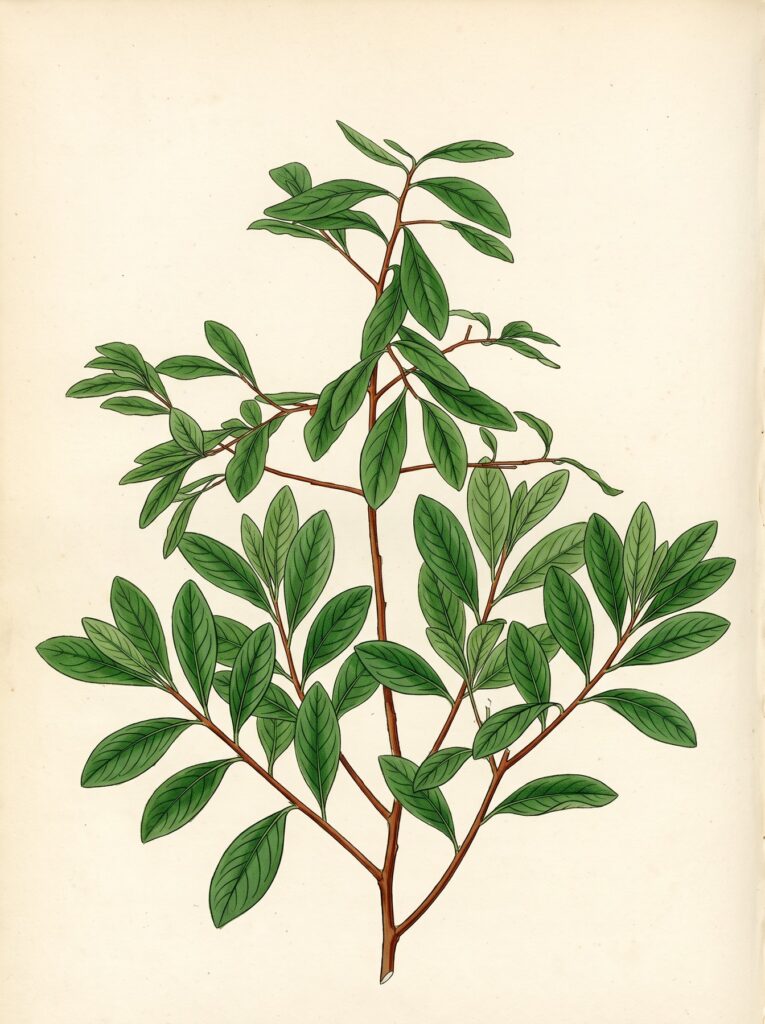
Botanical Overview
Erythroxylum coca is a perennial shrub of the family Erythroxylaceae, native to the Andean regions of South America. The primary part used medicinally is the leaf, commonly known as coca leaf. Traditional use involves chewing the dried leaves or preparing infusions. Common names include Coca and Coca leaf.
Energetics
The plant energetically is considered warming and moistening with a taste profile that includes bitter, pungent, and sweet. Directionally, it is ascending and outward in action, tonifying the qi aspect of vitality.
Primary Actions
- Analeptic (mild stimulant effect)
- Stimulant of the nervous system
- Mild local anesthetic properties
Indications
Western
- Fatigue
- Nausea
- Altitude sickness
- Mild pain
Syndromes
- Mild depressive states
- Mild anemia
- Altitude hypoxia
TCM
No substantial traditional Chinese medicine uses documented.
Ayurveda
No substantial Ayurvedic uses documented.
Unani
- Weakness
- Respiratory ailments
Constituents & Mechanisms
The leaf contains notable alkaloids including cocaine, flavonoids, tannins, essential oils, and minerals contributing to its stimulating and mild anesthetic effects.
Dosage & Preparations
- Traditional chewing of dried leaf, 5–15 g daily
- Infusion/tea of leaf, 1–2 g up to 3 times daily
Safety & Contraindications
Not recommended during pregnancy or lactation. Caution advised in hypertension and cardiovascular disease due to stimulant effects. Avoid combining with other stimulants or MAOI drugs. Toxicity relates primarily to isolated cocaine alkaloid rather than traditional leaf use.
Astrological Correspondences
No credible sources found to assign planetary or elemental rulers.
Selected References
- Medicinal Plants of the Andes
- Phytochemical and Pharmacological Study of Erythroxylum coca Leaves
- The Coca Leaf: Traditional Use and Pharmacology (WHO Monograph)